Which 5-Inch Off-Road Light Fits Your Project?
Selecting the right 5-inch auxiliary lamp starts at the vehicle mounting location and follows a structured five-point engineering verification: mounting geometry, housing form factor, optical beam and auxiliary function, regional road-legal approval, and electrical harness and lab documentation. A 5-inch lamp succeeds in production or fleet builds when its housing depth, bracket swing, and beam pattern match both the physical opening and the target illumination zone, backed by compliance paperwork covering that exact SKU configuration.
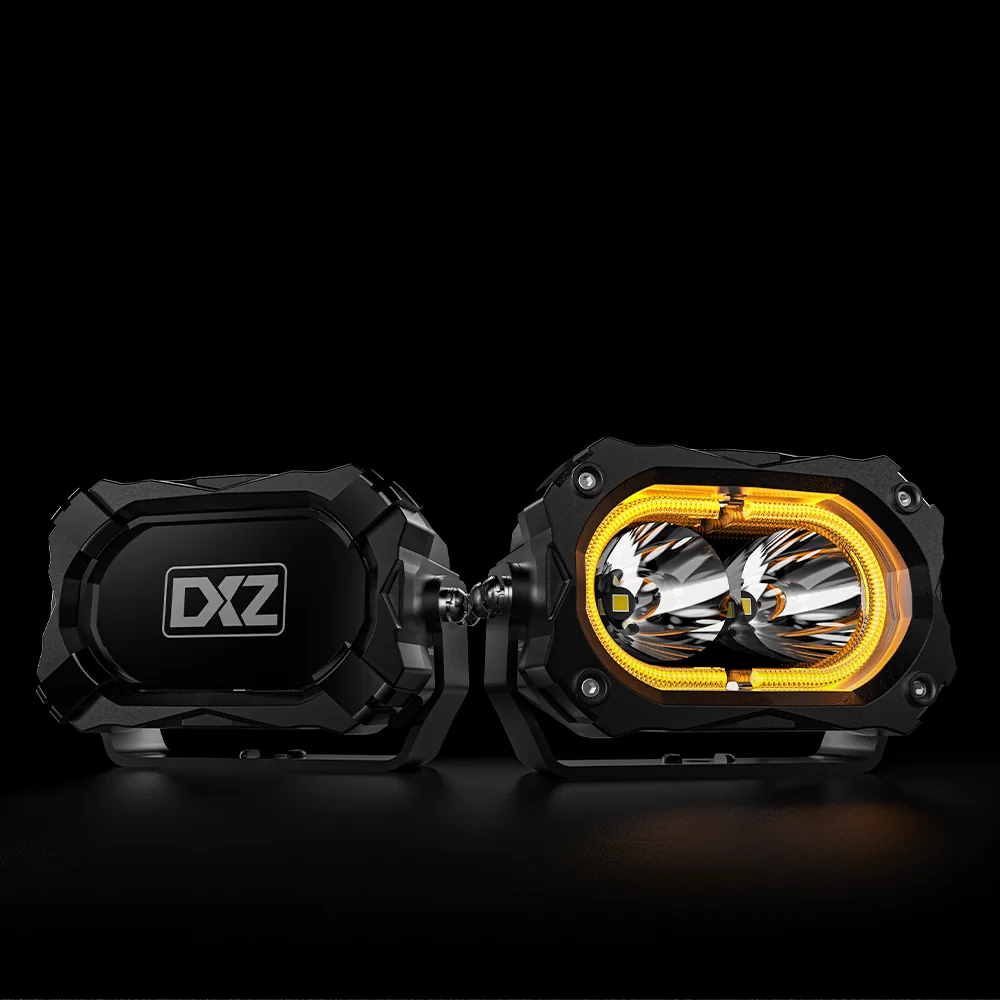
Because two lamps marketed under the same “5-inch” nominal class often use completely different optical reflectors, thermal housings, and wiring pinouts, evaluating raw lumen tables in isolation rarely predicts real-world fitment. Across the DXZ product range, for example, the 5C01 5-inch off-road spot light and the 5C02 5-inch 35W flood LED light with DRL share an identical 99 mm housing depth, yet the 5C01 projects a focused spot beam reaching 1 lux at 422 m while the 5C02 delivers wide area coverage reaching 1 lux at 249 m. Meanwhile, projects with tighter rear clearance can step into the adjacent compact class with the 45C01 triple-reflector combo LED light, which trims housing depth down to 70 mm while integrating both a white main beam and an amber DRL.
The 5-Point Engineering Checklist for 5-Inch Auxiliary Lamps:
- Mounting Geometry & Clearance: Verify rear housing depth (70 mm to 99 mm), overall height including the pedestal or trunnion bracket, and vertical tilt clearance.
- Housing Form Factor: Match round bull-bar housings, square bracket-mount pods, or flanged flush-mount bodies to the bumper, grille, or body panel opening.
- Beam Pattern & Dual-Function Optics: Align spot, flood, combo, side-shooter, and white/amber DRL optics with driving speed and work-zone width.
- Function-Specific Compliance: Confirm whether the project requires SAE/DOT compliance, ECE R10 electromagnetic compatibility, or ECE R112 / R7 road-legal lighting certificates.
- Harness Pinout & Verified Lab Data: Check 2-pin vs. 3-pin/4-pin connectors, lead lengths (37 cm vs. 3 m), IP68/IP69K test standards, and integrating sphere luminous flux records.
DXZ 5-Inch & Compact Class Project Selection Matrix
To streamline assortment planning for distributors and vehicle upfitters, the table below maps key DXZ 5-inch and compact 4.5-inch class models against their mechanical depth, optical output, and primary build applications:
| DXZ Model | Form & Depth | Beam & Function | Measured Output | Primary Project Fit |
|---|---|---|---|---|
| 5C01 | 5″ Round, 99 mm | Spot Beam | 1 lux at 422 m | Bull bars, front racks, long-range highway and desert builds |
| 5C02 | 5″ Housing, 99 mm | 35W Flood + DRL | 1,817 lm, 1 lux at 249 m | Wide trail shoulders, work trucks, and forestry machinery |
| 45C01 | 4.5″ Compact, 70 mm | 3-Reflector Combo + Amber DRL | Balanced mid and wide field | Shallow bumper fog pockets, A-pillars, and tight grilles |
| 45C04 | 4.5″ Compact, 79 mm | Main Beam + Selectable DRL | 3,047 lm at 40.72 W | Heavy-duty upfitter kits requiring high verified flux |
| 5R1 | 5″ Short-Lead Unit | Auxiliary Configuration | 37 cm pre-terminated lead | OEM and fleet builds with close-junction factory harnesses |
Check 1: 3″ vs. 5″ vs. 7″ Off-Road Lights — When the 5-Inch Size Band Fits
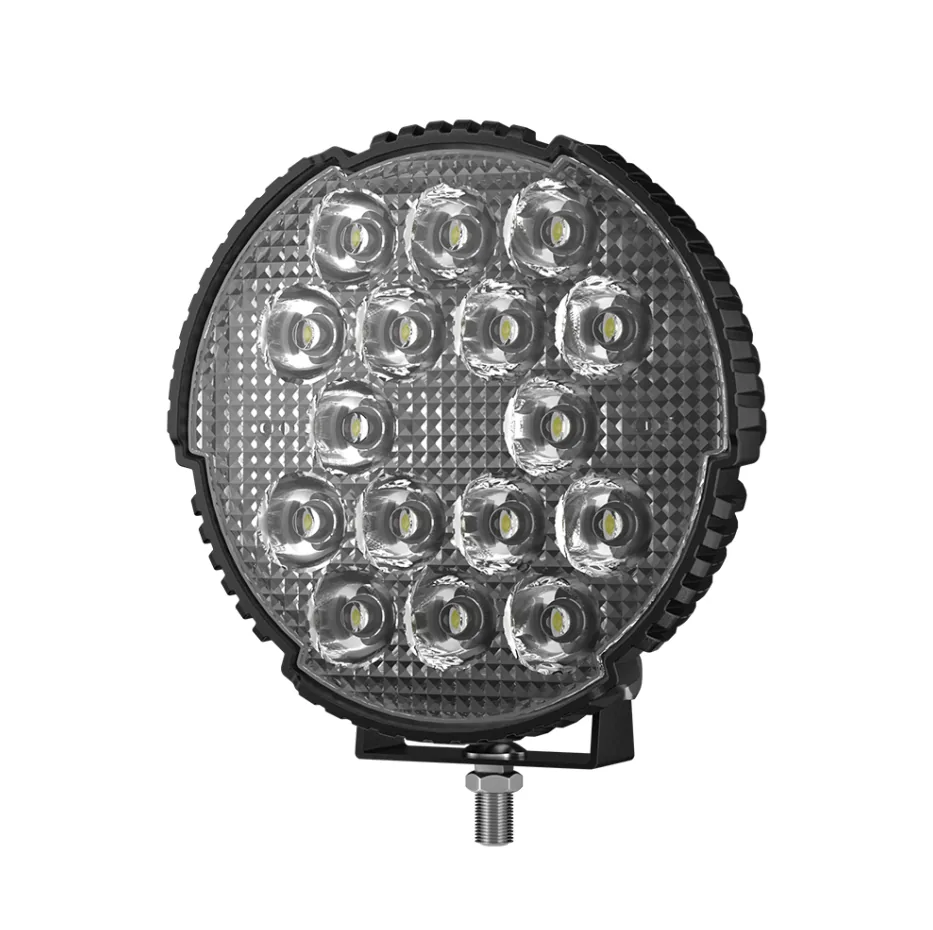
Within a complete automotive lighting catalog covering 3-, 4-, 5-, 6-, 7-, and 9-inch formats, the 5-inch class occupies the functional middle ground between compact 3-to-4-inch utility pods and heavy-duty 7-to-9-inch round driving lamps. It provides buyers with a larger optical reflector aperture and higher thermal dissipation capacity than a 3-inch cube without requiring the deep mounting footprint and heavy bracketry of a 7-inch or 9-inch housing.
Selecting this size band depends on balancing available mounting volume against required throw distance:
- Shallow Cavities & A-Pillars: Where a stamped steel bumper fog pocket, recessed grille slot, or hood hinge (A-pillar) bracket restricts rear depth, a shallow 5-inch housing—or a compact 4.5-inch alternative like the 70 mm deep 45C01 or 79 mm deep 45C04—prevents contact with internal radiator shutters or windshield wipers.
- Open Bull Bars & Roof Racks: When the mounting bar offers ample depth and the primary mission is high-speed long-distance visibility, a full-depth 99 mm 5-inch spot lamp (like the 5C01) or a 7-inch driving light maximizes reflector focus.
- Near-Field Perimeter Fill: For close-range rock crawling or side-curb visibility, compact 3-inch pods remain practical supplementary fillers.
For a deeper breakdown of how vehicle speed and terrain dictate lamp placement, review our engineering guide on balancing distance, corner fill, and dust penetration in trail lighting.
Check 2: Form Factor Selection — Round Driving Lights, Square Pods & Flush Mounts
The exterior profile of the vehicle mounting surface determines whether a round, square, or flush-mount housing integrates cleanly:
- Round Housings: Traditional circular profiles match tubular bull bars, rally light bars, and classic 4×4 front guards. Browse our full line of round and forward LED driving lights for long-range forward builds.
- Square & Rectangular Bracket Pods: Squared housings align naturally with rectangular front bumper cutouts, laser-cut grille inserts, and utility rack crossbars. You can compare compact bracket-mounted options across our wholesale LED pod lights catalog.
- Flush-Mount Pods: Installing flush-mount LED light pods requires cutting a precise template opening into flat steel bumpers, service truck bodies, or rear trailer panels and securing the flanged bezel directly to the sheet metal.
Before finalizing the purchase order, verify four mechanical packaging dimensions beyond nominal diameter:
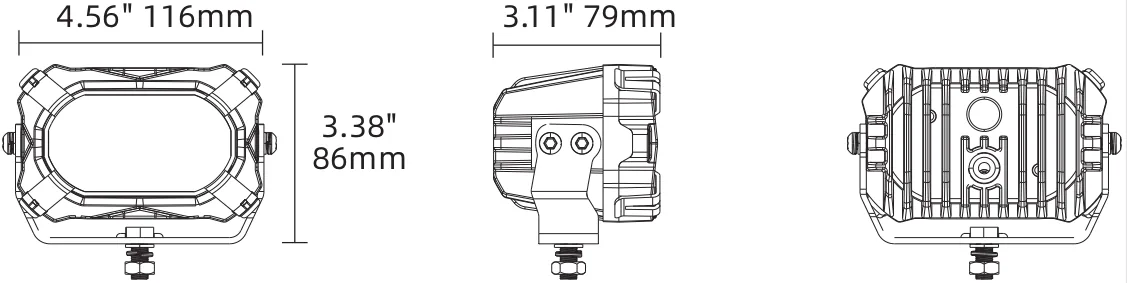
- Total Housing Depth & Rear Swing Clearance: Confirm that a 99 mm body (5C01/5C02), 79 mm body (45C04), or 70 mm body (45C01) leaves enough room behind the mounting tab to tilt the lamp vertically during beam aiming.
- Overall Installed Height with Bracket: Account for the added height of the bottom pedestal mount or U-bracket (plus M8 or M10 mounting bolts) when fitting lamps inside enclosed bull-bar hoops.
- Cable Exit & Lead Length: Check whether the gland exits from the rear cap or bottom housing. A 3 m cable lead on the 5C01 supports full routing back to the engine bay fuse box, whereas the 37 cm pigtail lead on the 5R1 is engineered for builds with an existing weatherproof junction box right behind the bumper.
- Hood (Bonnet) Sightlines: When mounting 5-inch lamps on A-pillar ditch brackets or hood hinges, verify the lower cutoff angle so wide-angle stray light does not reflect off a gloss-painted hood and impair driver night vision.
Check 3: Beam Patterns & Optical Functions — Spot, Flood, Combo, Side-Shooter & Amber DRL
Matching optical distribution to the driver’s field of view ensures every watt of electrical input illuminates usable terrain:
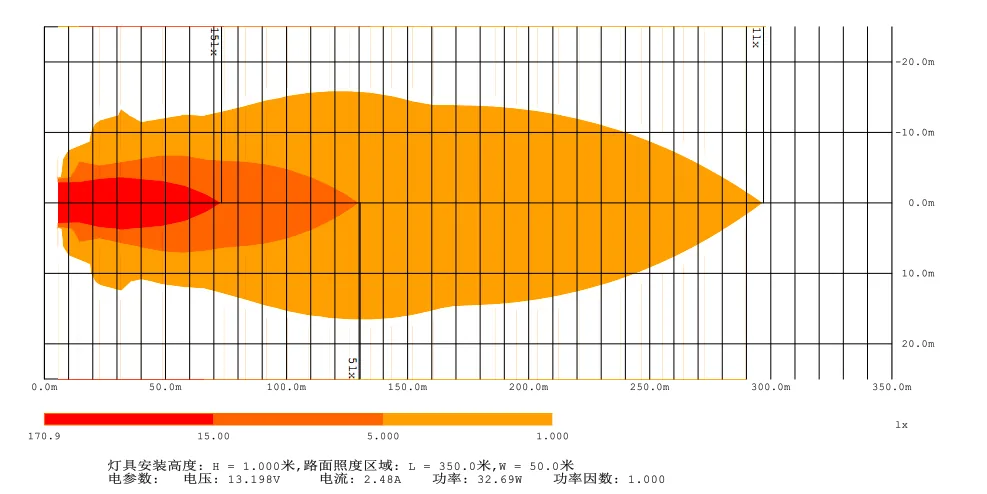
- Spot Beam: Concentrates candela into a tight central cone for long-range highway and desert sightlines (such as the 5C01 reaching 1 lux at 422 m).
- Flood & Scene Beam: Spreads illumination across a wide horizontal and vertical angle (such as the 5C02 reaching 1 lux at 249 m) for agricultural equipment, mining service vehicles, and camp perimeter lighting.
- Combo Beam: Combines central distance optics with wide outer reflector facets in a single housing (such as the triple-reflector 45C01), ideal when bumper space limits the build to a single pair of lamps.
Because terms like spot, flood, and combo beam patterns serve as general industry categories rather than fixed photometric standards, two 5-inch lamps with identical wattage can produce very different lux profiles on the road. Always evaluate the factory isolux and light distribution diagrams for the specific SKU suffix before locking in your inventory.
Specialized Optical Configurations for High-Margin Builds:
- Side-Shooter LED Pods: Incorporate angled outer LED emitters on both sides of the main reflector to illuminate steep trail shoulders and tight switchbacks without requiring separate cornering brackets.
- Dual-Color (White / Amber) Output: Allows drivers to run crisp 6000K white light in clear conditions and switch electronically to high-penetration 3000K amber light to cut through heavy rain, snow, or desert dust backscatter.
- Amber DRL vs. Position Lights: Many 5-inch lamps integrate background backlighting or halos. From a regulatory and wiring standpoint, LED daytime running lights (DRL) and front position lights operate under distinct luminous intensity limits and switching rules. When sourcing a combined lamp, verify the exact backlight color, ignition-on vs. headlight-dimming control logic, and separate function approvals.
Check 4: Market Compliance — Verifying ECE R112, R7, R10 & SAE/DOT Approvals
Distributors and fleet specifiers supplying regulated markets must verify compliance at the individual model and lighting-function level:
- North American Markets: On-highway auxiliary driving and fog lamps require verification against applicable SAE / DOT (FMVSS 108) photometric and mechanical standards.
- European, UK & Australian Markets: Road-legal installation relies on UNECE regulations, where each regulation code governs a specific function:
- ECE R112 (or R149): Governs road-legal headlamps and auxiliary driving beams (including Reference Number limits).
- ECE R7 (or R148): Governs front and rear position lamps, stop lamps, and end-outline marker functions.
- ECE R10: Governs Electromagnetic Compatibility (EMC), ensuring the LED driver does not interfere with vehicle CAN-bus systems, two-way fleet radios, or GPS receivers.
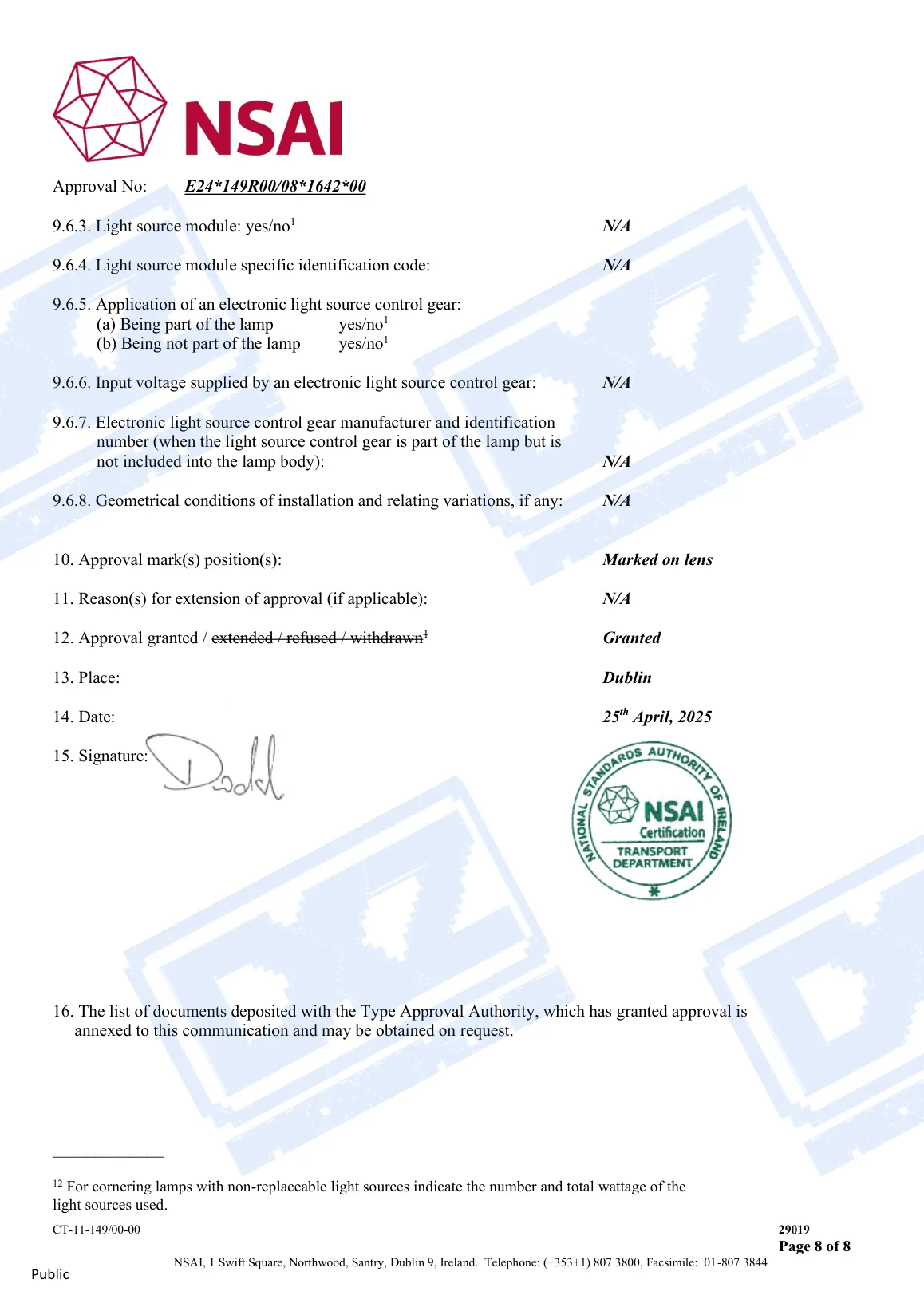
When reviewing supplier specifications, check what each listing actually covers. The DXZ certificate file shows CE-EMC conformity with the EMC Directive 2014/30/EU for the 5-inch models (EN IEC 55015, EN IEC 61547, EN IEC 61000-3-2, EN IEC 61000-3-3 test reports), while the UN R149 driving-beam approval and the UN R148 signalling approvals in the same file cover type 10C02. Match the function you plan to use to the regulation that covers it, model by model. Before placing a bulk order, follow a strict ECE R112, R7, and R10 E-mark certificate verification process: cross-check the E-mark country code and approval number molded into the physical lens against the test certificate’s covered model list, regulation edition (including transitional provisions), and permitted mounting pairs for your target country.
Check 5: Electrical Pinouts, IP68/IP69K Standards & Integrating Sphere Test Data
Validating laboratory test conditions protects importers and upfitters from field warranty claims and inconsistent batch performance.
1. Ingress Protection: IP67, IP68, and IP69K Testing
Water and dust resistance ratings—specifically IP67, IP68, and IP69K vehicle lighting standards—measure distinct environmental exposure methods rather than a simple linear scale:
- IP67: Protects against temporary water immersion under standardized depth and duration.
- IP68: Covers continuous or deeper immersion under parameters defined between the manufacturer and buyer.
- IP69K: Tests resistance against high-pressure, high-temperature steam and water jet washdowns common in forestry, mining, and construction fleets.
Because test protocols under IEC 60529 and ISO 20653:2023 differ in nozzle distance and cycle definitions, request datasheets that state the exact test standard and confirm whether the rating includes the mated rear connector and breather valve.
2. Theoretical Chip Lumens vs. Integrating Sphere Luminous Flux
In the aftermarket lighting industry, catalogs frequently display theoretical lumens—calculated by multiplying the cold-state maximum rating of each LED chip—alongside actual measured luminous flux captured in a calibrated integrating sphere after thermal stabilization:
- On the 5C02 specification table, theoretical output is rated at 10,000 lm while actual integrating sphere luminous flux measures 1,817 lm.
- On the 45C-BW-F8, theoretical output is rated at 8,000 lm against a measured single-lamp integrating sphere flux of 2,020 lm.
- In the DXZ Laboratory off-road light test database, model 45C04 records a verified 3,047 lm at 13.199 V, 3.085 A, and 40.72 W, tested at an ambient 25.3 °C and 65% relative humidity in default main-beam mode (DRL off).
Publishing both numbers gives engineering buyers a transparent baseline for optical efficiency and thermal management. When establishing quality-control acceptance limits for repeat production batches, always lock in the test voltage, thermal stabilization time, and active operating mode.
3. Harness Pinouts, Voltage Range & Procurement File Package
Before releasing a production order, apply our framework on how to compare LED lighting specs across manufacturers and request four model-specific documents:
- Conditioned Spec Sheet: Detailing 9–36 V DC multi-voltage compatibility and stabilized current draw at 13.2 V.
- Connector & Switch Logic Diagram: Single-function spot lamps like the 5C01 typically utilize a 2-wire lead (or 2-pin Deutsch DT connector), whereas dual-function lamps like the 5C02 and 45C01 require a 3-wire or 3-pin/4-pin DT harness to switch independently between the white main driving beam and the amber DRL.
- Photometric IES / LDT Files & Sample-Numbered Test Reports.
- Group Homologation Certificate: Verifying that the exact factory SKU suffix appears on the certificate annex.
Build Your 5-Inch Product Assortment or Request Project Samples
Whether you are expanding a regional distribution catalog or engineering a vehicle-specific upfit kit, consolidating your mounting position, housing depth, beam pattern, compliance code, and connector pinout into a single specification eliminates sampling delays:
- For Importers, Distributors & Private Label Brands: Build a cohesive 5-inch tier by pairing long-range spot units (5C01), wide work floods with DRL (5C02), and shallow combo pods (45C01). DXZ supports low-MOQ private labeling, bezel laser logo engraving, custom retail packaging, and sub-licensing documentation for E-mark approved models.
- For 4×4 Upfitters & Commercial Fleet Engineers: Request paid inspection samples, 3D/2D mechanical drawings, and customized harness lead lengths (from 37 cm bumper pigtails to full 3 m relay harnesses) to test physical clearance and beam cutoff on your target vehicle platform.
Browse the latest DXZ automotive lighting catalogs to review full dimensional drawings, or submit your target SKU configurations through our B2B Request a Quote portal to receive model-level test reports and sample pricing.
Frequently Asked Questions: Specifying 5-Inch Off-Road Lights
1. Can a 5-inch LED pod fit inside a factory front bumper fog pocket?
It depends on rear cavity depth and bracket swing clearance. Standard 5-inch housings like the DXZ 5C01 and 5C02 measure 99 mm deep, which suits open bull bars and heavy-duty steel bumpers. If your factory fog pocket or shallow aftermarket bumper has less than 85 mm of internal clearance, selecting a compact 4.5-inch class model such as the 45C01 (70 mm depth) or 45C04 (79 mm depth) provides the visual presence of a mid-size pod without contacting inner fender liners.
2. What wiring harness and connector do 5-inch LED lights with Amber DRL require?
A single-beam 5-inch spot or flood light requires a standard 2-conductor cable or 2-pin Deutsch DT connector (positive and ground). Models equipped with an independent Amber or White DRL/position light—such as the 5C02, 45C01, and 45C04—require a 3-wire lead or 3-pin/4-pin waterproof connector so the main driving beam and daytime running light can be controlled on separate circuits or through a dual-function rocker switch.
3. Why is measured integrating sphere lumen output lower than theoretical lumen ratings?
Theoretical lumen ratings sum the maximum laboratory output of each individual LED emitter at 25 °C before optical and thermal losses. Once assembled inside a sealed IP68/IP69K aluminum housing behind a polycarbonate lens and driven to thermal equilibrium, every automotive lamp experiences optical transmission loss and thermal derating. Evaluating actual integrating sphere output (such as 1,817 lm on the 35W 5C02 or 3,047 lm on the 40.72W 45C04) gives B2B buyers the true stabilized light output delivered in the field.